Spec Battle: Netgear Nighthawk M7 5G Router vs Dell Xps 14 2026 — Is It Worth Upgrading?
The landscape of mobile productivity has shifted dramatically as we move through 2026. No longer are professional workflows tethered to office cubicles or home desks. Instead, the modern "office" is a fluid concept, moving from airport lounges and high-speed trains to remote cabins and urban cafes. To support this level of mobility, two distinct hardware categories have become essential: the high-performance portable workstation and the ultra-reliable mobile hotspot. Today, we look at two titans in these respective fields: the Dell XPS 14 (2026 Edition) and the Netgear Nighthawk M7 5G Router.
While one is a laptop and the other is a networking device, they are increasingly being evaluated together by professionals who are looking to overhaul their mobile kit. The question for many is not just "Which laptop should I buy?" but rather "How does my hardware ecosystem support my bandwidth-heavy tasks?" In this deep-dive analysis, we explore the cutting-edge specifications of the Dell XPS 14 2026 and how it pairs with—or competes against—the dedicated connectivity of the Nighthawk M7. We will evaluate whether these 2026 upgrades offer enough value to justify the investment for those already holding 2024 or 2025 hardware.
The Evolution of the Dell XPS 14: The 2026 Standard
The Dell XPS 14 has reached a point of refinement in 2026 that positions it as perhaps the most balanced laptop in the Windows ecosystem. Following the design language shift seen in previous years, the 2026 model doubles down on the "invisible" aesthetic—featuring the seamless glass haptic touchpad and the capacitive touch row—while significantly upgrading the internals to handle the AI-integrated software suites that have become standard in professional environments.
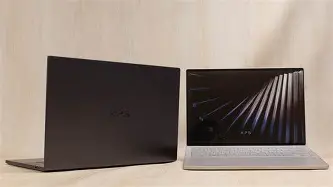
Under the hood, the XPS 14 2026 utilizes the latest iteration of neural processing units (NPUs), capable of staggering trillions of operations per second (TOPS). This isn't just about faster background blur in video calls anymore; it is about local execution of Large Language Models (LLMs) and real-time video rendering optimizations that previously required a desktop-class GPU. Dell has managed to maintain the slim profile of the CNC-machined aluminum chassis while improving thermal dissipation through a new phase-change cooling system, allowing the 14-inch frame to punch well above its weight class in sustained workloads.
Netgear Nighthawk M7: The Backbone of Mobile Connectivity
If the XPS 14 is the brain of the mobile operation, the Netgear Nighthawk M7 is the nervous system. As 5G Advanced (5.5G) networks become the global standard in 2026, the M7 stands out as one of the few devices capable of fully saturating these new bands. It is more than a simple hotspot; it is a portable networking hub designed for those who cannot afford a single second of latency or a dropped packet during a mission-critical upload.
The M7 moves beyond the limitations of integrated laptop modems. While many laptops, including certain configurations of the XPS, offer internal 5G, they often struggle with heat management and antenna positioning. The Nighthawk M7 solves this by being a dedicated unit with a massive internal battery and optimized antenna arrays that support mmWave and Sub-6 bands with parity. For the creative professional working with 8K raw footage or the data scientist pulling from remote cloud clusters, the M7 provides a dedicated "lane" of traffic that remains independent of the laptop's primary processing heat.
Detailed Product Analysis and Use Case Performance
When comparing these two pieces of technology, we must look at how they interact in the real world. The Dell XPS 14 2026 features a stunning Tandem OLED display technology that reaches 1600 nits of peak brightness, making outdoor work a genuine possibility. However, working outdoors often means relying on public Wi-Fi—a notorious security risk and performance bottleneck—or a phone's "personal hotspot" mode, which quickly drains the phone's battery and throttles under thermal load.
Discover deals on Laptops & Computers — updated daily.
Shop Amazon →This is where the Nighthawk M7 justifies its presence in a professional's bag. By offloading the networking task to the M7, the XPS 14 can dedicate its entire battery capacity to the CPU and GPU. Furthermore, the M7 supports Wi-Fi 7, creating a high-speed local area network for multiple devices. Imagine a photographer on location: the XPS 14 is used for tethered shooting and quick edits, while the M7 simultaneously uploads the gallery to a client in the background without the laptop's internal modem causing the chassis to throttle.
Pros and Cons: Dell XPS 14 (2026)
- Pro: Leading-edge Tandem OLED display provides unprecedented color accuracy and brightness for creative work.
- Pro: Significant NPU performance gains allow for localized AI workflows without relying on cloud subscriptions.
- Pro: Exceptional build quality and aesthetics that remain the benchmark for premium Windows ultrabooks.
- Con: The capacitive touch row remains polarizing for users who prefer physical function keys for blind-typing.
- Con: Limited port selection necessitates the use of a USB-C hub for legacy peripherals or SD card expansion.
- Con: High entry price point compared to 14-inch competitors in the gaming or budget business sectors.
Pros and Cons: Netgear Nighthawk M7 5G Router
- Pro: Support for 5G Advanced (5.5G) speeds provides fiber-like connectivity in mobile environments.
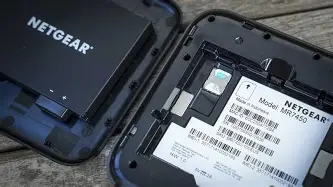
- Pro: Long-lasting removable battery and the ability to run directly on AC power for permanent installations.
- Pro: Integrated 2.5Gbps Ethernet port allows for a hardwired connection to the XPS 14 or a secondary router.
- Con: The device is relatively bulky compared to previous iterations due to the enhanced cooling and antenna arrays.
- Con: High hardware cost plus the ongoing expense of a dedicated high-tier data plan.
- Con: Setup and optimization of bands may be too complex for the casual user who just needs basic internet.
Technical Comparison Table
| Feature | Dell XPS 14 (2026) | Netgear Nighthawk M7 |
|---|---|---|
| Primary Function | High-Performance Laptop / Workstation | Portable 5G Advanced Router / Hotspot |
| Connectivity | Wi-Fi 7, BlueTooth 5.4, Optional 5G | 5G mmWave/Sub-6, Wi-Fi 7, 2.5G Ethernet |
| Display | 14.5-inch Tandem OLED (120Hz) | 2.8-inch Color Touchscreen LCD |
| Processing Power | Latest Multi-core CPU + Dedicated NPU | Qualcomm Snapdragon X80 Platform (Optimized) |
| Portability | 3.2 lbs (Approx), 18mm thickness | 0.6 lbs (Approx), Pocketable-plus size |
| Battery Life | Up to 14 hours (Productivity work) | Up to 12 hours (Active 5G streaming) |
Buying Guide: Is the Upgrade Worth It?
Deciding whether to upgrade in 2026 depends heavily on your current hardware cycle. Historically, laptops have been on a three-year replacement cycle, but the rapid integration of AI and 5G Advanced has shortened that window for professionals who rely on speed and connectivity to remain competitive.
Who should upgrade to the Dell XPS 14 2026?
If you are currently using an XPS 14 or 13 from 2023 or earlier, the 2026 model represents a generational leap. The shift to Tandem OLED is not just a marginal improvement; it is a transformative change in how images and video are viewed, offering deeper blacks and much higher sustained brightness than the standard OLED panels of 2024. Furthermore, if your daily workflow involves generative AI, local data processing, or heavy multitasking, the 2026's NPU gains will save you hours of "waiting" time every week. The move to Wi-Fi 7 also ensures that this laptop is future-proofed for the next half-decade of networking infrastructure.
Who should buy the Netgear Nighthawk M7?
The Nighthawk M7 is a "must-buy" for the digital nomad or the field professional who operates in areas where 5G mmWave is being deployed. If you rely on your phone's hotspot and find that your phone becomes hot to the touch, loses battery rapidly, or provides inconsistent speeds, the M7 is the silver bullet. It is particularly valuable for those who travel internationally; the M7's broad band support is often superior to the regional modems found inside many laptops, providing a more reliable global roaming experience. If you already own the Nighthawk M6 Pro, the M7's value lies in its 5G Advanced compatibility and the improved Wi-Fi 7 local broadcast range.
The Synergy Factor
Often, the best "upgrade" isn't one or the other, but the combination. By pairing a Wi-Fi 7 capable laptop like the XPS 14 with a Wi-Fi 7 router like the M7, you unlock the 6GHz spectrum for local data transfer. This means you can wirelessly move files between devices at speeds that rival traditional SSD-to-SSD wired transfers. For teams working in the field, the M7 acts as the "docking station" for the internet, allowing multiple XPS units to connect to a single high-speed source securely.
The Impact of 2026 Technology on Daily Workflows
To understand the value of these specs, we must look at a typical day for a 2026 professional. A marketing executive might start their morning in a hotel lobby. Using the Dell XPS 14’s AI-enhanced noise cancellation and camera framing (powered by the NPU), they attend a crystal-clear video conference. Despite the hotel's congested Wi-Fi, the executive remains connected via the Nighthawk M7, which has locked onto a 5G Advanced cell tower three blocks away, providing a dedicated 2Gbps downlink.
Discover deals on Laptops & Computers — updated daily.
View Offers →By midday, they are on a train. The XPS 14’s Tandem OLED screen allows them to edit a high-contrast video campaign even with sunlight streaming through the window. The M7, tucked away in a backpack, continues to sync the raw video files to the corporate cloud. The laptop stays cool because its internal modem is powered off, and the battery percentage drops slowly. This level of frictionless productivity was a pipe dream in 2020; in 2026, with this specific hardware pairing, it is the expected standard.
Furthermore, the Dell XPS 14 2026 introduces a new level of sustainable engineering. Dell has moved toward a higher percentage of recycled cobalt in the batteries and a chassis that is easier to disassemble for component recycling. For corporate buyers focused on ESG (Environmental, Social, and Governance) goals, the 2026 XPS series represents a more responsible procurement choice than many of its predecessors. The Nighthawk M7 follows suit with a focus on longevity; its removable battery means that when the lithium cells eventually degrade after years of use, the entire unit doesn't need to be discarded—a simple battery swap restores it to factory performance.
Conclusion
The decision to upgrade to the Dell XPS 14 2026 or the Netgear Nighthawk M7—or both—comes down to a simple metric: the value of your time and the necessity of your uptime. The Dell XPS 14 2026 is a masterpiece of industrial design and computational power, successfully integrating the latest AI hardware without sacrificing the sleek form factor that the XPS brand is known for. It is the definitive choice for the professional who needs a primary machine that can do everything from spreadsheet modeling to creative design.
Conversely, the Netgear Nighthawk M7 provides the specialized infrastructure required to make that laptop truly mobile. It takes the burden of connectivity away from the computer, offering a more robust, secure, and high-speed alternative to integrated solutions. While the initial investment for both devices is significant, the performance gains in the 2026 cycle are substantial enough to offer a clear return on investment. For those who demand the absolute best in mobile productivity, these two devices represent the current pinnacle of their respective categories, proving that in 2026, being "well-connected" and "well-equipped" are two sides of the same coin.