Om D E M10 Mark Iv Specs, Features, and Value: Is it worth the price tag?
In the landscape of modern photography, the shift toward mirrorless technology has created a diverse marketplace where portability often competes with performance. The Olympus OM-D E-M10 Mark IV sits at the intersection of these two priorities, offering a Micro Four Thirds experience tailored specifically for enthusiasts, travelers, and those moving up from smartphone photography. As the fourth iteration of a beloved series, this camera carries the heavy responsibility of maintaining the classic aesthetic that made its predecessors famous while integrating enough modern technology to remain competitive in a world of high-resolution sensors and advanced autofocus systems.
For many potential buyers, the primary question isn't just about megapixels or frames per second; it is about whether this specific tool can justify its cost in an era where entry-level full-frame cameras are dropping in price and smartphones are becoming increasingly capable. This analysis delves deep into the architecture, functional capabilities, and real-world value of the E-M10 Mark IV to determine if it truly earns its place in your camera bag.
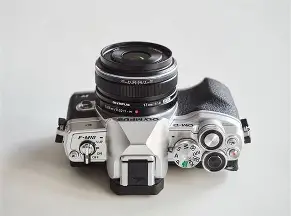
The Evolution of a Compact Icon
The OM-D line has always been defined by its homage to the original OM film cameras of the 1970s. The Mark IV preserves this heritage with a magnesium-alloy and high-grade polycarbonate construction that feels substantial yet weighs significantly less than a traditional DSLR. Measuring just 122 x 85 x 49 mm and weighing roughly 383 grams with a battery and memory card, it is purposefully designed for all-day carry.
This iteration brings a significant internal upgrade: a 20.3-megapixel Live MOS sensor. Previous versions relied on a 16-megapixel sensor that, while capable, was beginning to show its age in terms of dynamic range and fine detail. Combined with the TruePic VIII image processor, the Mark IV offers a noticeable step up in image quality, particularly in how it handles color reproduction and noise at higher ISO settings. For the traveler who spends their days wandering through cobblestone streets or hiking through forest trails, this combination of high resolution and low weight is a primary selling point.
Key Specifications at a Glance
| Feature | Specification |
|---|---|
| Sensor | 20.3 MP Micro Four Thirds Live MOS |
| Image Processor | TruePic VIII |
| Image Stabilization | 5-Axis In-Body Image Stabilization (IBIS); up to 4.5 stops |
| Autofocus | 121-Point Contrast Detection with Face and Eye Priority |
| Video | 4K at 30p, 25p, 24p; Full HD up to 60p |
| Continuous Shooting | Up to 15 fps (Mechanical Shutter) / 8.7 fps (Electronic) |
| Monitor | 3.0-inch 1.04m-dot Tilting Touchscreen (180° Flip-down) |
| Connectivity | Wi-Fi and Bluetooth Built-in |
| Weight | 335g (Body Only) / 383g (With Battery/Card) |
Feature Analysis: Beyond the Megapixels
While the sensor upgrade is the headline, the soul of the E-M10 Mark IV lies in its usability features. Olympus has doubled down on making the camera approachable for beginners without stripping away the manual controls that veteran photographers appreciate. The inclusion of 5-axis In-Body Image Stabilization (IBIS) remains one of the strongest arguments for this camera. Unlike many competitors in the entry-level bracket that rely on lens-based stabilization, the Mark IV stabilizes the sensor itself. This means that every lens attached—even vintage manual glass via adapters—becomes stabilized. In practical terms, this allows photographers to shoot at slower shutter speeds in low light without the need for a tripod, making it an exceptional tool for indoor museum photography or evening street scenes.
Advancements in Autofocus and Portability
The autofocus system has seen a refined algorithm compared to the Mark III. While it still uses contrast-detection rather than the more advanced phase-detection found in higher-end models like the E-M1 Mark III, the speed and accuracy for static and moderately moving subjects are impressive. The updated Face and Eye Priority AF is particularly useful for parents and portrait photographers, as it stays locked on the subject even when they occasionally look away from the camera or move across the frame.
The physical interface is also noteworthy. The grip has been made slightly deeper, providing a more secure hold, which is a welcome change for those with larger hands. The flip-down screen is another modern touch designed with the "selfie" and "vlogger" generation in mind. By flipping the screen down below the camera, the user can see themselves clearly while keeping the camera at eye level. While some prefer side-articulating screens, the flip-down mechanism keeps the weight centered, which helps with balance when using a small tripod or holding the camera at arm's length.
Real-World Performance: Shooting Experience
Using the E-M10 Mark IV is an exercise in tactile satisfaction. The dedicated dials for exposure compensation, shutter speed, and aperture provide immediate feedback. For those coming from a smartphone, the "Advanced Photo" mode serves as a bridge. It allows users to access complex techniques like Live Composite—where the camera only records new light sources in a scene—without needing to master manual settings. This is perfect for light painting, star trails, or capturing fireworks against a dark sky.
Find top-rated Electronics products at great prices.
Shop Amazon →In terms of color science, the Mark IV produces JPEGs that are rich, vibrant, and characteristic of the "Olympus look." Skin tones are natural, and greens and blues are rendered with a depth that often requires post-processing on other systems. The ISO range extends from 200 to 25,600 (expandable down to 100). While Micro Four Thirds sensors are physically smaller than APS-C or Full Frame sensors, the Mark IV manages noise remarkably well up to ISO 3200. Beyond that, some grain becomes visible, but for the vast majority of social media sharing and standard-sized prints, the quality remains excellent.
Video Capabilities
While not marketed as a dedicated cinema camera, the E-M10 Mark IV is a highly competent video tool. The ability to shoot 4K at 30 frames per second allows for high-definition memories that look crisp on modern televisions. The IBIS system shines here as well, providing a "gimbal-like" smoothness to handheld footage. For casual vloggers or travelers wanting to capture cinematic "B-roll" of their journeys, the lack of a microphone jack is the only significant hurdle. Audio must be recorded via the built-in stereo mics or synced with an external recorder, a factor that might sway professional content creators but remains a non-issue for the average family user.
Pros and Cons
- Pro: Exceptional Portability. The Micro Four Thirds system allows for lenses that are significantly smaller than their APS-C or Full Frame counterparts, making the entire kit pocketable in some instances.
- Pro: Industry-Leading IBIS. The 5-axis stabilization is a game-changer for handheld low-light photography and steady video recording.
- Pro: Intuitive Interface. A perfect blend of physical manual controls and smart software features like the AP (Advanced Photo) mode.
- Pro: Improved Sensor. The jump to 20MP brings the E-M10 in line with modern standards, offering better detail and cropping flexibility.
- Pro: Flip-Down Selfie Screen. Facilitates easy self-framing for portraits and social media content.
- Con: Contrast-Only Autofocus. While fast, it can struggle with very fast-moving subjects or in extremely low-contrast environments compared to phase-detection systems.
- Con: No Microphone Jack. This limits the camera's utility for serious videographers who need high-quality onboard audio.
- Con: Micro-USB Charging. In an era where USB-C is the standard, the inclusion of the older Micro-USB port feels slightly dated for a modern device.
- Con: Small Sensor Limitations. In extreme low light or when seeking ultra-shallow depth of field, the physically smaller sensor cannot quite match the performance of Full Frame alternatives.
Buying Guide: Is It the Right Choice for You?
When considering the OM-D E-M10 Mark IV, it is essential to look at your primary photography goals. This camera is designed for a specific demographic that values the experience of photography as much as the final output. Before making the purchase, consider these three categories of buyers:
The Travel Enthusiast
If your goal is to document your travels without being weighed down by a bulky camera bag, the Mark IV is arguably the best value in its class. When paired with the 14-42mm EZ "pancake" lens, the camera can almost fit into a jacket pocket. The Micro Four Thirds lens ecosystem is also vast, meaning you can find high-quality telephoto or wide-angle lenses that are a fraction of the size of traditional optics. For the hiker or the urban explorer, this portability is priceless.
The Smartphone Upgrader
For those frustrated by the flat, digital look of smartphone photos, the Mark IV offers a gateway into "real" photography. The physical sensor is significantly larger than any phone sensor, providing better dynamic range and natural background blur (bokeh). The tactile dials teach the user the fundamentals of exposure in a way a touchscreen never can, making it a brilliant educational tool.
The Family Photographer
The improved Face and Eye detection make this an excellent choice for capturing candid moments of children and pets. The fast burst rate (up to 15 fps) ensures that you won't miss the decisive moment of a soccer game or a birthday celebration. Its ease of use means that other family members can pick it up and take great photos in "Auto" mode without needing a tutorial.
Competitive Comparison: E-M10 Mark IV vs. The Market
The price tag often positions this camera against entry-level APS-C cameras. While APS-C cameras have a slightly larger sensor, they often lack the in-body stabilization found in the Olympus at this price point. Furthermore, the total "system weight" is almost always higher with APS-C. When you factor in the cost of lenses, the Micro Four Thirds system often proves more economical for those looking to build a versatile kit including zooms and primes.
Find top-rated Electronics products at great prices.
Shop Amazon →Evaluating the Value Proposition
To determine if the E-M10 Mark IV is worth the price tag, we must look at the longevity of the device. Olympus (now operating under OM System) has created a body that doesn't feel like a disposable piece of tech. Its metal-and-leatherette aesthetic is timeless, and the 20MP resolution is likely to remain the "sweet spot" for hobbyist photography for several years to come.
The real value, however, is found in the stabilization. For many users, a camera that allows you to leave the tripod at home is worth a premium. When you consider that you are getting a 5-axis stabilizer, 4K video, a high-resolution EVF (Electronic Viewfinder), and access to some of the sharpest small lenses ever made, the price becomes much easier to justify. It isn't just a camera; it's a complete photographic solution that encourages you to take it everywhere.
Economic value is also reflected in the used market and the durability of the Micro Four Thirds mount. Because this mount is shared between OM System and Panasonic, owners have access to over 100 native lenses. This means that as your skills grow, the camera body can stay with you while you invest in optics that will hold their value for a decade or more. For a beginner or intermediate photographer, this path for growth is a critical factor in the "is it worth it" equation.
Conclusion
The Olympus OM-D E-M10 Mark IV is a refined, capable, and undeniably stylish tool. It does not try to be a professional sports camera or a high-end cinema rig; instead, it perfects the role of the "everyday carry" enthusiast camera. By upgrading the sensor and refining the autofocus, Olympus addressed the primary criticisms of the Mark III while maintaining the compact form factor that users love.
While the lack of a microphone jack and the use of contrast-detection AF might be deal-breakers for niche users, they do not detract from the camera's primary mission: making high-quality photography accessible and enjoyable. For the photographer who wants a blend of classic style, modern convenience, and the freedom of a lightweight system, the Mark IV offers exceptional value. It justifies its price tag not through raw specs alone, but through the consistent, beautiful results it produces in the hands of those who actually carry it with them. In the end, the best camera is the one you have with you, and the E-M10 Mark IV makes it very easy to ensure that you never leave home without a way to capture the world around you.