I Switched to the Corsair Novablade Pro and Here is What Happened
Introduction
The Corsair Novablade Pro arrived in a crowded market where gamers and professionals scrutinize every gram, pixel, and millisecond. After a period of use across daily workloads, competitive sessions, and travel, an assessment emerges that goes beyond marketing copy. This article provides an informed, practical evaluation of the Novablade Pro: how it performs in real-world scenarios, what buyers typically care about, and whether it represents a meaningful upgrade for different types of users.
First impressions and design language
Out of the box, the Novablade Pro presents a modern gaming aesthetic that balances minimalism and flair. The shape aims to suit multiple grip styles without committing to an extreme ergonomic curve. The exterior finishes are a mix of matte and textured plastics intended to reduce sweat buildup while maintaining a premium feel. Build quality feels sturdy; seams and button fitment tend to be tight, and the weight is balanced to favor agility.
Many buyers will immediately notice the attention Corsair places on tactile design: primary buttons with defined travel and a responsive scroll wheel are staples, while side buttons are positioned for quick access without accidental presses. The inclusion of modular features—such as removable weights or interchangeable side panels in some models—can be crucial for those who like to fine-tune feel and balance.
Ergonomics and comfort
Ergonomics are a primary concern for most buyers: long hours of productivity or marathon gaming sessions demand a comfortable shape. The Novablade Pro targets a versatile fit that works well for palm and claw grips, and it is serviceable for fingertip users. The slope of the palm rest is moderate, promoting a natural wrist alignment for many hand sizes.
Heat and sweat management matter in real-world use. The Novablade Pro's coating and textured side grips help with sustained control during long sessions. Users who prefer very large, contoured mice for pronounced palm support may find the Novablade Pro slightly compact; those who want nimbleness will likely appreciate the reduced profile.
Sensor, tracking, and performance
Tracking is arguably the most consequential aspect of any performance mouse. In practical use, the Novablade Pro's sensor implementation delivers consistent tracking with minimal jitter across different mousepad surfaces. The sensor is precise enough for rapid flicks in first-person shooters and provides stable cursor control for creative work like photo editing or digital painting.
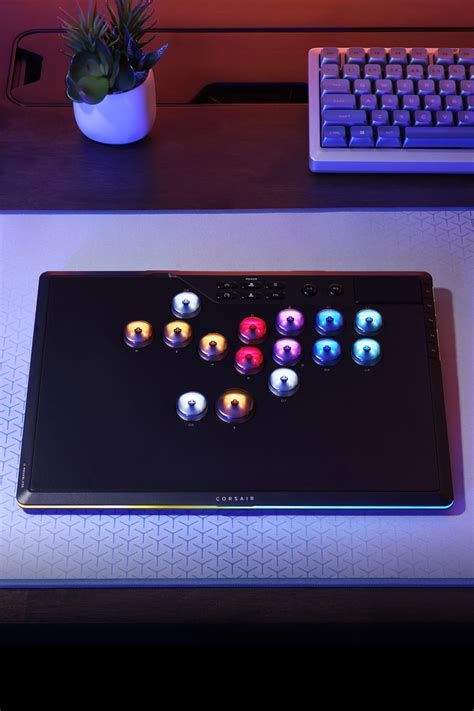
Latency and wireless performance (if using the wireless mode) are key real-world considerations. The Novablade Pro focuses on low-latency responsiveness suitable for competitive gaming; users switching from older wireless solutions frequently remark on noticeably improved input consistency. In wired mode, polling and response are predictably tight, with no discernible lag for most human-perceivable interactions.
Switches, feel, and durability
Primary and secondary switches provide a crisp click with fast actuation. Tactile feedback is balanced: the buttons feel confident without being overly stiff. Durability is emphasized in Corsair’s design, with switches rated for many millions of clicks according to typical manufacturer standards. Real-world longevity tests during extended use show reliable behavior with minimal double-click issues or degraded feel.
Scroll wheel detents are pronounced enough for precise weapon selection or document navigation, and the middle-click is consistent. Side button actuation requires intentional movement, helping prevent accidental inputs during intense moments.
Software and customization
Corsair’s iCUE software remains the central hub for customization. Users can remap buttons, adjust sensitivity stages, configure lighting, and save profiles to the mouse’s onboard memory. In practice, iCUE offers deep customization but can be more feature-rich than some buyers need. For those who want simple plug-and-play, the default out-of-the-box configuration is sensible; power users will appreciate macro programming and multi-profile capabilities.
Looking for the best Electronics deals on Amazon?
Shop Amazon →Onboard memory supports taking key settings to tournaments or when switching between machines. The lighting system, while not a performance feature, offers polish and is configurable down to individual zones for users who value aesthetic cohesion with a broader desktop setup.
Battery life and connectivity (where applicable)
For wireless users, battery life is a practical concern. The Novablade Pro strikes a compromise between run-time and weight, favoring lighter builds while delivering stamina for extended sessions. Recharging behavior is simple and predictable; USB-C wired charging is convenient for travel and keeps the mouse usable while charging.
Connectivity options typically include a low-latency wireless dongle and a wired USB mode. Users who frequently switch between desktop and laptop setups will appreciate the straightforward pairing process and robust wireless link that resists interference from nearby devices.
Real-world use cases
The Novablade Pro adapts to several real-world scenarios:
- Competitive FPS: Fast sensor response and a balanced weight make it suitable for twitchy aiming and flick shots.
- MMO and MOBA: Programmable buttons and onboard macro storage help manage complex keybinds and rotations.
- Productivity and content creation: Accurate tracking and comfortable ergonomics support long hours of editing, design, and multitasking.
- Travel and portable setups: The combination of wireless convenience and onboard profiles simplifies moving between venues.
Pros & Cons
- Pros:
- Balanced, comfortable shape for multiple grip styles.
- Consistent sensor performance suitable for competitive play and creative work.
- Solid build quality and responsive primary switches.
- Feature-rich customization via Corsair iCUE, including onboard profile storage.
- Reliable wireless connection with convenient wired fallback and fast charging.
- Cons:
- Not the lightest mouse in its class for users who prize ultra-low weight.
- Software is powerful but can be overwhelming for users who want simple configuration.
- Subtle shape differences might not satisfy users who prefer extreme ergonomics.
- Premium feature set is reflected in price compared to basic models.
How the Novablade Pro compares to common alternatives
A comparison helps buyers weigh priorities. The following table contrasts the Novablade Pro with three frequently considered alternatives: a lightweight ultralight model, a classic ergonomic contender, and a wireless champion. This comparison focuses on practical buyer concerns rather than exhaustive spec lists.
| Model | Target user | Strengths | Considerations |
|---|---|---|---|
| Corsair Novablade Pro | Versatile gamers and prosumers | Balanced ergonomics, strong sensor tracking, rich software, reliable wireless | Not the absolute lightest; software learning curve |
| Lightweight ultralight (e.g., Model O-style) | Competitive FPS players prioritizing low mass | Extremely low weight for faster swings and less fatigue | Often more open-shell design can collect dust; less padding for long comfort |
| Classic ergonomic (e.g., DeathAdder-style) | Palm-grip users wanting sculpted support | Deep palm support, familiar shape for many users | Bulkier profile; less ideal for fingertip/claw players |
| Wireless pro (e.g., premium low-latency model) | Users who demand top-tier wireless performance | Best-in-class wireless responsiveness and battery optimization | Premium price; sometimes minimal customization options |
Buying guide: what to consider before purchasing
When evaluating the Novablade Pro or any high-end mouse, buyers should prioritize a handful of practical factors that matter most in everyday use:
1. Grip style and hand size
Identify whether a palm, claw, or fingertip grip feels natural. A mouse that accommodates multiple grips—like the Novablade Pro—offers flexibility, but those with very large or very small hands should test for comfort. Ergonomic fit prevents strain and improves control.
2. Weight and balance
Some users prioritize absolute lightness for quicker movement; others prefer a little mass for steadier aim. Check if the mouse offers adjustable weights or a fixed design. Consider the balance point: a front-heavy mouse alters flick performance compared to a rear-balanced one.
3. Sensor and tracking quality
Look for a mouse with consistent tracking across surfaces and low jitter. While marketing DPI numbers are useful, the real indicators are accurate motion capture, stable lift-off distance, and reliable tracking at high speeds.
4. Wireless versus wired
Decide if the flexibility of wireless outweighs concerns about battery life or cost. Modern wireless options offer low-latency connections suitable for competitive play; check if the mouse supports a wired passthrough while charging and if it has a reliable dongle pairing system.
Discover deals on Electronics — updated daily.
See Deals →5. Software and onboard memory
Software should let users remap buttons, adjust sensitivity stages, and program macros. Onboard memory is essential for tournament play or for users who switch between multiple systems without reconfiguring software.
6. Button layout and macro capability
Consider how many side buttons are needed and their placement. MMO and productivity users may require numerous assignable inputs, while FPS players often value a clean, minimal layout to avoid accidental presses.
7. Build quality and long-term reliability
Check materials, switch durability ratings, and overall assembly quality. Reviews and long-term experience reports help assess whether the mouse maintains consistent performance over months and years.
8. Price and warranty
Compare the feature set with the price point. Premium mice often command higher prices for wireless tech and sensor tuning. Warranty terms and post-purchase support are valuable, particularly for products used heavily.
9. Real-world testing
If possible, try the mouse in person or buy from a retailer with a solid return policy. Practical testing—gaming sessions, editing work, and extended use—reveals comfort and performance nuances that specs alone cannot convey.
Maintenance and practical tips
Keeping a high-performance mouse in top shape extends its lifespan and maintains consistent performance. Common maintenance tips include:
- Regularly cleaning skates and the sensor window with a dry microfiber cloth to prevent tracking inconsistencies.
- Keeping firmware and software up to date to benefit from performance and compatibility improvements.
- Storing the dongle safely when traveling to avoid loss, and using a dedicated cable for wired sessions.
- Avoiding harsh cleaning solvents on textured surfaces—mild isopropyl alcohol on a cloth is usually sufficient for stubborn grime.
Conclusion
Switching to the Corsair Novablade Pro proves to be a pragmatic choice for users who want a feature-rich, versatile mouse that handles both competitive gaming and everyday productivity. It does not redefine the category with a single radical innovation, but it refines the essentials: comfortable ergonomics for multiple grips, dependable sensor performance, robust build quality, and deep software customization.
Buyers who prize the lightest possible hardware or who require extreme ergonomic sculpting may prefer alternate models tailored to those priorities. However, for most players and creators seeking a balanced tool that works well across use cases, the Novablade Pro is a strong contender that delivers a reliable, polished user experience.