I Switched to the Arctis 7 Plus Wireless and Here is What Happened
Introduction
The gaming headset market has long been dominated by a few key players, but perhaps no line has been as influential as the SteelSeries Arctis series. For years, the original Arctis 7 was the gold standard for mid-range wireless performance, striking a balance between comfort, sound quality, and battery life that competitors struggled to match. However, as the industry moved toward USB-C charging and more demanding battery requirements, the original hardware began to show its age. The arrival of the Arctis 7 Plus Wireless was not just another incremental update; it was a targeted response to the modern needs of gamers who move between PCs, consoles, and mobile devices. Switching to this headset reveals a shift in priorities where convenience and versatility are placed on the same pedestal as acoustic performance. In this article, we explore the deep technical nuances, ergonomics, and daily usability of the Arctis 7 Plus Wireless to determine how it holds up in a crowded field of audio peripherals.
When an enthusiast decides to upgrade their primary audio driver, they are usually looking for the resolution of specific pain points. In the case of wireless gaming, those pain points are typically related to charging frustration, connection stability, and long-term wearing fatigue. The Arctis 7 Plus addresses these through a series of hardware refinements that, while subtle on the spec sheet, fundamentally change the user experience over a twelve-hour gaming session. This transition is not merely about having a newer version of an old favorite; it is about the integration of a headset into a modern, multi-platform ecosystem. Whether you are a competitive FPS player requiring pinpoint spatial awareness or a professional who needs a headset that can survive a workday of Zoom calls followed by an evening of exploration in an open-world RPG, the Arctis 7 Plus Wireless positions itself as a singular solution.
Detailed Product Analysis and Review
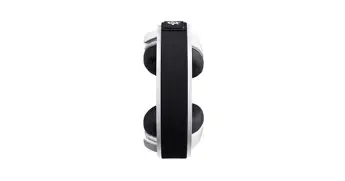
The first thing one notices when handling the Arctis 7 Plus Wireless is the familiar industrial design that pioneered the "ski-goggle" headband. While many gaming brands opt for aggressive aesthetics with jagged lines and excessive RGB lighting, SteelSeries has maintained a sophisticated, matte-black profile that wouldn't look out of place in a professional office. The build quality remains robust, utilizing a steel frame that manages to feel lightweight yet resistant to the warping and snapping that often plagues plastic-heavy competitors. The suspension band is the secret to its comfort, distributing weight evenly across the crown of the head rather than concentrating it at a single pressure point. This design choice is critical for users who wear glasses or those prone to tension headaches during long sessions.
Acoustic Performance and Drivers
At the heart of the Arctis 7 Plus are high-quality 40mm neodymium drivers. While some manufacturers push for 50mm or even 60mm drivers, SteelSeries focuses on the tuning and clarity of their existing hardware. The sound signature is famously "flat" or balanced out of the box, which is a departure from the bass-heavy "V-shape" sound found in many consumer headsets. This transparency allows for a more accurate representation of the game’s audio engine. In competitive environments, this means that the subtle high-frequency sounds—such as the rustle of grass or the click of a reloading weapon—are not drowned out by bloated explosions. This clarity is further enhanced by the headset’s compatibility with Sonar, a part of the SteelSeries GG software suite, which allows for granular EQ adjustment and the application of spatial audio profiles.
Wireless Stability and Connectivity
The switch to a 2.4 GHz lossless wireless connection via a USB-C dongle is perhaps the most significant functional upgrade. In previous iterations, the bulky circular dongle was a point of contention. The new compact USB-C transmitter is designed for modern hardware, fitting seamlessly into the front of a PlayStation 5 or the side of a gaming laptop. This move also opens the door for native compatibility with Android devices, iPads, and the Nintendo Switch in handheld mode. During testing, the wireless range proved to be exceptional, maintaining a clear signal even when moving between rooms—a necessity for those who want to stay in a chat with friends while grabbing a drink from the kitchen. The latency is virtually non-existent, providing the instantaneous feedback required for rhythm-based games or high-stakes shooters.
Battery Life and Charging Logistics
Battery anxiety is the primary deterrent for those considering a switch from wired to wireless. The Arctis 7 Plus provides a substantial leap in this department, offering up to 30 hours of continuous use on a single charge. In real-world scenarios, this translates to nearly a full week of gaming for the average user. More importantly, the inclusion of USB-C fast charging means that a 15-minute "emergency" charge can provide up to three hours of playtime. This eliminates the frustration of sitting down to play only to realize the headset is dead. The physical power button and LED indicator give clear feedback on battery status, ensuring you are never caught off guard in the middle of a raid or a competitive match.
The ClearCast Microphone
Communication is the backbone of multiplayer gaming, and the Discord-certified ClearCast microphone remains one of the best in the industry. It uses a bidirectional design, which is the same technology used by aircraft carrier deck crews for noise cancellation. It effectively ignores background noise—like a mechanical keyboard clicking or a room fan—and focuses purely on the user's voice. The retractable nature of the mic is a hallmark of the series, allowing it to hide away when you are playing a single-player game or watching a movie, preventing it from ever being in the way or getting lost.
Pros and Cons
- Pro: Exceptional Comfort - The suspension headband and AirWeave ear cushions allow for multi-hour sessions without ear sweat or head pressure.
- Pro: Versatile USB-C Connectivity - The compact dongle makes it easy to switch between PC, PS5, Switch, and mobile devices without complicated setups.
- Pro: Balanced Sound Profile - Audiophiles and gamers alike will appreciate the lack of muddy bass, providing a much higher level of detail in the mid and high ranges.
- Pro: Fast Charging Capabilities - USB-C fast charging is a life-saver for those who occasionally forget to plug in their peripherals overnight.
- Pro: Intuitive On-Ear Controls - Having a dedicated ChatMix dial on the headset allows for instant balancing between game audio and voice comms without alt-tabbing.
- Con: Software Dependence - To get the absolute best out of the headset, you must use the SteelSeries GG software, which some users find too bloated.
- Con: Size of the USB-C Dongle - While improved, the horizontal width of the dongle can sometimes block adjacent USB ports on tight laptop chassis.
- Con: Non-Removable Battery - Like most wireless headsets, once the lithium-ion battery eventually degrades over several years, it is not easily user-serviceable.
Headset Comparison: Arctis 7 vs. Arctis 7 Plus vs. Arctis Nova 7
Choosing the right model within the SteelSeries lineup can be confusing. The table below highlights the key differences that buyers typically consider when deciding whether to opt for the "Plus" model over the older standard version or the newer Nova redesign.
Shop the latest Audio & Headphones picks on Amazon.
See Deals →| Feature | Arctis 7 (Original) | Arctis 7 Plus Wireless | Arctis Nova 7 |
|---|---|---|---|
| Battery Life | 24 Hours | 30 Hours | 38 Hours |
| Charging Port | Micro-USB | USB-C | USB-C |
| Fast Charge | No | Yes (15 min = 3 hrs) | Yes (15 min = 6 hrs) |
| Wireless Dongle | Large USB-A Circular | Compact USB-C | Ultra-compact USB-C |
| Simultaneous Bluetooth | No | No | Yes |
| Weight | 354g | 365g | 325g |
Buying Guide: Is the Arctis 7 Plus Right for You?
When looking for a new gaming headset, it is easy to get distracted by marketing buzzwords like "7.1 Surround Sound" or "Hi-Res Audio." To help you decide if the Arctis 7 Plus matches your specific needs, consider the following criteria based on common gaming habits and environments.
1. Platform Compatibility
If you find yourself switching between a PC for work and a console for leisure, the Arctis 7 Plus is an excellent choice. The USB-C dongle is a "plug-and-play" solution. However, Xbox users should note that the standard Arctis 7 Plus is not natively compatible with Xbox wireless protocols due to Microsoft's proprietary security chip. Xbox owners should specifically look for the 7X version, which includes a toggle on the dongle to work across all platforms including Microsoft's consoles.
2. Environmental Awareness vs. Isolation
The AirWeave ear cushions are designed for breathability. This means they are great for keeping your ears cool, but they do not offer the same level of passive noise isolation as leatherette or protein leather pads. If you game in a very noisy environment—such as a shared dorm room or a loud living room—you may find that sounds leak in. Conversely, if you need to be able to hear a doorbell or a family member calling your name, the Arctis 7 Plus offers the perfect balance of immersion and situational awareness.
3. The Role of ChatMix
One of the most underrated features of the Arctis series is the physical ChatMix dial. If you frequently play multiplayer games while using Discord or PlayStation Party Chat, this feature is transformative. It allows you to fade out your teammates when things get too loud during a crucial moment in the game, or conversely, fade out the game music to focus on instructions from your raid leader. If you only play single-player games, this feature may be redundant, but for social gamers, it is often the reason they never switch to another brand.
4. Longevity and Maintenance
The durability of the Arctis 7 Plus is high, but like all peripherals, it requires some maintenance. The headband elastic will eventually stretch out over 18 to 24 months of heavy use. Fortunately, these are replaceable and available in various colors and designs. The ear cushions are also easily removable for cleaning or replacement. When buying a headset, you should always consider the availability of replacement parts, as it can extend the life of your investment significantly.
Advanced Software Integration: SteelSeries Sonar
The true potential of the Arctis 7 Plus Wireless is unlocked through the Sonar Audio Software Suite. For a long time, gaming software was seen as a necessary evil to keep drivers updated, but Sonar has changed that perception by providing professional-grade audio tools to the average gamer. Upon switching to this headset, the depth of customization available through the software is one of the most rewarding "what happened" moments in the user journey.
Sonar allows users to set independent audio streams for different applications. You can have a "Game" channel, a "Chat" channel, and a "Media" channel, each with its own EQ settings. For example, you can set the Game channel to the "FPS Footsteps" preset, which boosts the specific frequencies associated with movement, while keeping your Media channel on a "Music" preset that emphasizes bass and treble for a more cinematic experience. Furthermore, the software includes AI noise cancellation for the microphone, which adds an extra layer of filtration on top of the physical bidirectional hardware. This ensures that even if you are using a loud mechanical keyboard with "blue" clicky switches, your teammates will only hear your voice.
Discover deals on Audio & Headphones — updated daily.
View Offers →Another benefit of the software is the inclusion of "Virtual Surround." While the headset is technically stereo, its drivers are capable of producing a convincing 360-degree soundstage when paired with spatial audio algorithms. In games like Counter-Strike or Apex Legends, the ability to hear an enemy approaching from a 45-degree angle behind you can be the difference between a win and a loss. The Arctis 7 Plus handles this spatial processing with minimal distortion, maintaining the integrity of the sound even when virtualizing multiple channels.
What Happens During a Full Work-and-Play Day?
To truly understand the value of switching to the Arctis 7 Plus, one must look at a typical day in the life of a modern user. Starting at 9:00 AM, the headset serves as a dependable tool for professional communication. The understated design means you can wear it during a video conference without looking like a "gamer." The mic mute light is a small but vital feature; a red LED on the tip of the microphone gives you a visual confirmation that you are muted, preventing those awkward "hot mic" moments in professional meetings.
By lunchtime, the transition to a mobile device or a handheld console is seamless. You can unplug the USB-C dongle from your PC and pop it into a Nintendo Switch or an Android phone to watch a few videos or play a couple of rounds of a mobile game. There is no need for Bluetooth pairing, which often involves lag or dropped connections. The 2.4 GHz connection is consistent and instantaneous.
In the evening, during an extended four-hour gaming session, the ergonomic choices of the Arctis 7 Plus become evident. In many other headsets, this is the point where the "hot ear" syndrome begins, or where the weight of the device starts to strain the neck. The AirWeave fabric used in the cushions is moisture-wicking and allows for airflow, keeping the skin cool. The suspension band continues to carry the weight, making the headset feel as though it is floating rather than clamping. By the time you power down for the night, the battery indicator might have barely moved, leaving you ready for the next day without needing to find a charging cable.
Conclusion
The switch to the Arctis 7 Plus Wireless represents a move toward a more refined and hassle-free audio experience. It is a product that understands that the modern gamer is rarely tethered to just one device and that comfort is just as important as frequency response. By retaining the award-winning design of the original Arctis 7 and injecting it with the modern necessities of USB-C, improved battery life, and superior software integration, SteelSeries has created a headset that excels in nearly every category that matters to the daily user.
While audiophiles searching for high-impedance studio performance might still look toward wired open-back headphones, the Arctis 7 Plus is hard to beat as an all-encompassing lifestyle peripheral. It provides the clarity needed for competitive gaming, the noise cancellation required for clear communication, and the stamina to last through the longest weekends. If you are currently using a wired headset and are tired of the cable clutter, or if you are using a wireless headset with poor battery life and a micro-USB port, the Arctis 7 Plus Wireless is a logical and rewarding upgrade. It simplifies your setup while elevating the quality of every sound—from the ambient noise of a digital forest to the voice of a friend across the world.